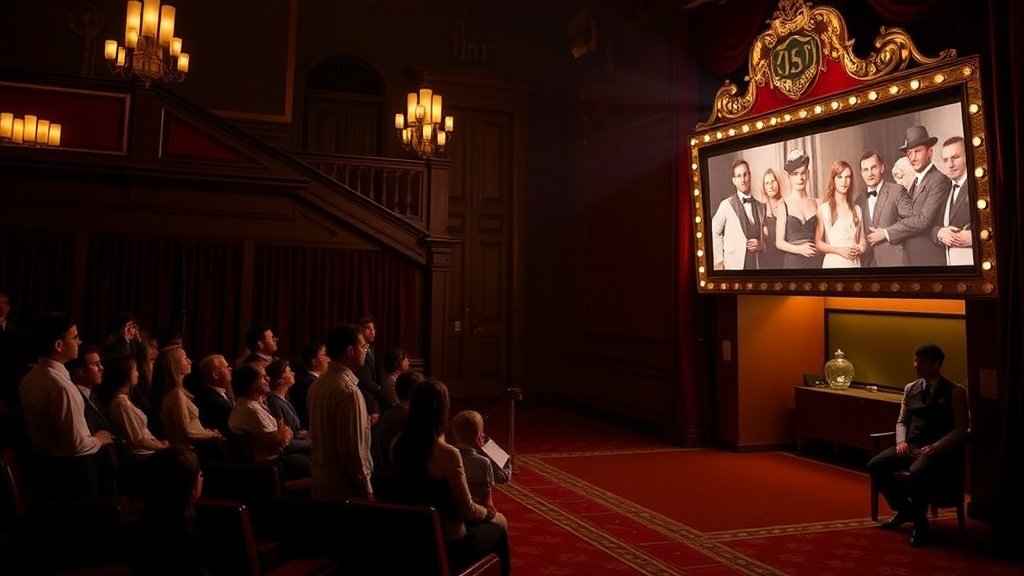
Bringing the Silent Screen Back to Life: Your Guide to Experiencing Early Cinema

What You'll Learn
Here's something that'll stop you in your tracks—more than 75% of all silent films ever made are now lost forever. We're talking about roughly 3,300 American films from the silent era that have simply vanished. No copies. No negatives. Gone. Yet the ones that survived offer something modern blockbusters can't touch—a raw, intimate connection to the past that feels almost like time travel. This guide will show you how to experience silent cinema the way audiences did a century ago, from finding rare screenings with live musical accompaniment to building your own thoughtfully curated collection. Whether you're a film buff hungry for something beyond Marvel's latest or just curious about what made Charlie Chaplin a global phenomenon, you're about to discover why these flickering images still cast such a powerful spell.
Why Do Silent Films Still Matter in the Age of Streaming?
The question isn't whether silent films are relevant—it's why we've convinced ourselves they're not. Modern audiences often assume silent cinema is primitive, something to endure rather than enjoy. That couldn't be further from the truth. Watch Buster Keaton's The General (1926) and you'll witness stunt work that would never get insurance approval today—real trains crashing into real rivers, performed by a man who never smiled on camera. The physical comedy, the visual storytelling, the way directors had to communicate everything through images alone—these aren't limitations. They're artistic achievements.
There's also something strangely refreshing about the silence itself. In a world of constant notification pings and algorithm-driven content, silent films demand a different kind of attention. You can't scroll through your phone while watching Sunrise (1927)—F.W. Murnau's visual poetry requires your eyes. The storytelling is pure cinema: movement, light, shadow, expression. No expositional dialogue dumps. No explosions every twelve seconds to keep you awake. Just the fundamentals of what makes movies magical in the first place.
The historical value is undeniable, too. Silent films captured cities that no longer exist, performances by artists who died before your grandparents were born, and social attitudes that reveal how much—and how little—has changed. When you watch The Kid (1921), you're not just watching a movie; you're stepping into 1920s Los Angeles, into Chaplin's particular genius, into a specific moment when cinema was inventing itself. That's cultural archaeology you can experience from your couch—or better yet, in a theater with an organist bringing the film to life.
Where Can You Watch Silent Films With Live Musical Accompaniment?
This is where silent cinema transforms from historical curiosity to genuine event. Silent films were never meant to be watched in silence—theaters employed pianists, organists, and even full orchestras to accompany screenings. The National Film Preservation Board notes that musical accompaniment wasn't merely background noise; it was an integral part of the storytelling, guiding audience emotions and filling the acoustic space that talkies would later dominate.
Finding these experiences today takes some detective work, but the rewards are worth it. Start with your local art house cinema or university film department—many host silent film nights with live organists, especially during October (horror classics like Nosferatu and The Phantom of the Carriage) or around Valentine's Day (romantic weepies like City Lights or The Crowd). The American Theatre Organ Society maintains a directory of venues with working theater organs—these instruments produce the authentic sound that accompanied silent films in the 1920s, with their thunderous bass notes and ethereal pipes.
If you're on the East Coast, the Museum of Modern Art in New York regularly screens silent films from their unparalleled collection, often with live piano or small ensemble accompaniment. The Telluride Film Festival in Colorado includes silent film restorations in their lineup almost every year, complete with orchestral scores commissioned specifically for the occasion. And don't overlook smaller regional festivals—the San Francisco Silent Film Festival has become the premier destination for serious enthusiasts, showcasing newly restored prints from archives around the world with world-class musicians performing original or period-appropriate scores.
For the truly dedicated, consider joining a local cinema organ society. These groups often host regular screenings in churches, civic auditoriums, or historic theaters equipped with Mighty Wurlitzers or similar instruments. There's something almost spiritual about watching Metropolis (1927) while a skilled organist pulls out all the stops—literally—creating a wall of sound that matches Fritz Lang's visual ambition. It's the closest you'll come to understanding why audiences in 1927 walked out of theaters feeling like they'd witnessed a miracle.
How Should You Build a Silent Film Collection That Goes Beyond the Obvious?
Everyone starts with Chaplin. Or Keaton. Or maybe Nosferatu if they're feeling spooky. These are gateway drugs for good reason—they're genuinely brilliant, widely available, and represent the medium at its most accessible. But the silent era produced thousands of films across every genre imaginable, and limiting yourself to the canon means missing hidden gems that deserve rescue from obscurity.
Start with the Criterion Channel or streaming services like Kanopy (free with most library cards) that license from major archives. Look beyond the obvious titles. Want comedy? Try Charley Bowers, a forgotten genius who combined live action with stop-motion animation in ways that still look surreal today. Interested in horror? Seek out The Man Who Laughs (1928)—not technically a horror film, but the inspiration for Batman's Joker, featuring a performance by Conrad Veidt that will haunt your dreams. Love action? Douglas Fairbanks was the original swashbuckler, and The Thief of Bagdad (1924) features sets so lavish they bankrupted studios.
Women filmmakers flourished during the silent era in ways they wouldn't again for decades. Alice Guy-Blaché directed hundreds of films starting in 1896. Lois Weber was one of the highest-paid directors in Hollywood, tackling social issues like birth control and capital punishment. Dorothy Arzner started as an editor before becoming one of the few female directors to transition successfully into sound films. Seeking out their work isn't just good politics—it's essential to understanding the full scope of what silent cinema achieved.
Physical media still matters for silent films, oddly enough. DVD and Blu-ray editions often include multiple musical scores (allowing you to compare interpretations), commentary tracks from historians who've spent decades with these films, and most importantly—the best available transfers. Silent films are often in the public domain, which means every budget label has released scratchy, incomplete, badly transferred versions. Invest in quality releases from labels like Kino Lorber, Criterion, or the British Film Institute. Your eyes will thank you, and you'll be supporting the archives that preserve these films.
What Resources Help You Understand the Historical Context?
Watching silent films without context is like visiting Rome without knowing anything about the Roman Empire—you'll enjoy the pretty pictures, but you'll miss the depth. The good news? We're living in a golden age of silent film scholarship, with more resources available than ever before.
Start with Kevin Brownlow's books—The Parade's Gone By and Hollywood: The Pioneers are oral histories compiled from interviews with silent film veterans conducted in the 1960s, when many were still alive to tell their stories. Brownlow, who received an honorary Academy Award for his preservation work, essentially created the field of silent film history. His documentary series Hollywood (1980) remains essential viewing, featuring rare clips and eyewitness testimony.
For ongoing scholarship, academic journals like Film History and The Moving Image publish new research regularly, often uncovering information about previously lost films or recontextualizing familiar ones. Podcasts have entered the conversation too—The Silent Film Podcast and Attaboy Clarence offer accessible deep dives into specific films and personalities. YouTube channels like Early Cinema and The Nitrate Film Interest Group share rare footage and technical knowledge about preservation.
Don't underestimate the value of silent film communities online. The Silent Era website maintains comprehensive databases of surviving films, their locations, and their restoration status. Reddit's r/silentfilm subreddit includes historians, collectors, and enthusiasts who can answer questions and recommend titles based on your interests. Facebook groups dedicated to specific stars or genres often include descendants or biographers who share primary sources unavailable elsewhere.
Most importantly, read the contemporary criticism. Trade publications like Variety and Moving Picture World from the 1910s and 1920s are digitized and searchable through library databases. Seeing how audiences and critics actually responded to these films when they were new—not through the lens of nostalgia, but as contemporary entertainment—provides invaluable perspective. You'll discover that some films we now consider masterpieces were controversial in their time, and some forgotten hits were genuine cultural phenomena.