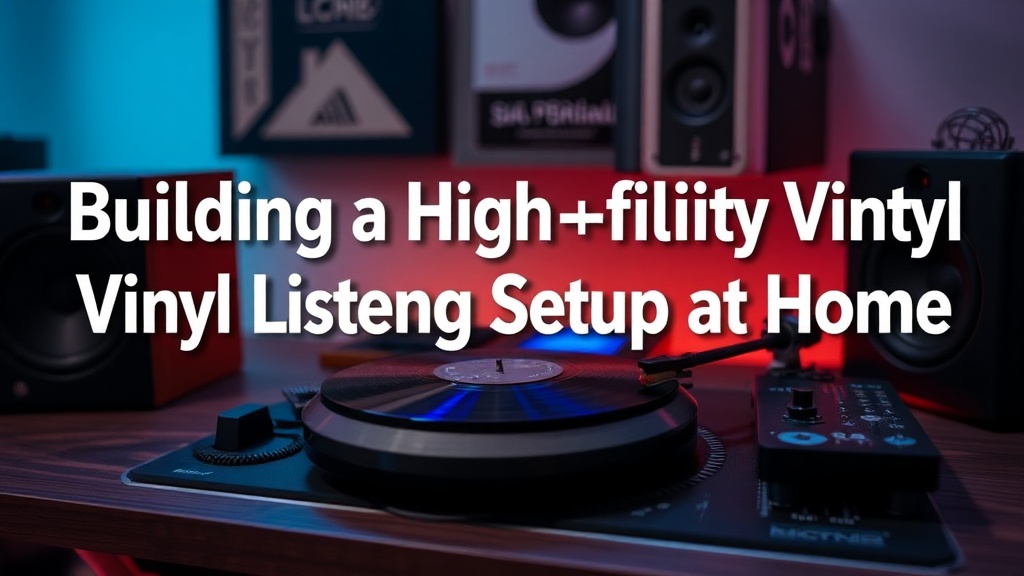
Building a High-Fidelity Vinyl Listening Setup at Home

Why Digital Audio Isn't the Only Way to Listen
Many people believe that high-fidelity audio is a pursuit reserved for wealthy audiophiles or people with massive, dedicated listening rooms. They assume that to get a "warm" sound, you need to spend thousands of dollars on equipment that looks like it belongs in a museum. This is a mistake. You don't need a fortune to experience the rich, analog textures of vinyl; you just need to understand how the signal chain works. Whether you're a casual listener or someone looking to dive deep into high-fidelity sound, building a turntable setup is about finding a balance between your budget and your personal taste in music.
The goal isn't to buy the most expensive gear on the market—it's to understand how each component influences the sound you hear. Unlike digital files, where the data is fixed, an analog setup is a physical chain of events. A needle hits a groove, a cartridge turns that movement into electricity, and an amplifier boosts that signal. If one link is weak, the whole experience suffers. This guide helps you piece together a system that actually sounds good without breaking your bank account.
What Is the Best Entry-Level Turntable for Beginners?
When you start looking for a turntable, you'll quickly realize that not all players are created equal. You might see cheap, "suitcase" style players in big-box retailers. While they look cool, they can actually damage your records over time because they often lack proper speed stability and have heavy tracking force. Instead, look for a belt-drive system. A belt-drive turntable uses a rubber belt to spin the platter, which helps isolate the motor's vibrations from the needle—a small detail that makes a massive difference in clarity.
If you're just starting, look for a turntable with a replaceable cartridge. This is a key piece of advice. Most cheap players have built-in cartridges that you can't upgrade, meaning you're stuck with that sound forever. A model with a detachable headshell allows you to swap out the cartridge later as you gain more experience. Check out the Vinyl Junkie community or specialized forums to see which models are currently considered reliable for beginners. You want something that offers adjustable counterweights and anti-skate settings to ensure the needle sits perfectly in the groove.
How Do I Choose the Right Speakers for My Setup?
Speakers are the final part of the chain, and they have a huge impact on how much "life" your music has. You have two main paths: active or passive speakers. Active speakers (also called powered speakers) have a built-in amplifier, so you can plug them directly into your receiver or phono preamp. This is a great way to keep things simple and save space. Passive speakers, on the other hand, require an external amplifier to function. While this adds another piece of gear to your shelf, it gives you more control over the sound signature of your system.
When selecting speakers, pay attention to the frequency response. If you love hip-hop or electronic music, you might want speakers with a bit more low-end punch. If you're into jazz or classical, you might prioritize mid-range clarity and a wider soundstage. Don't just look at the wattage—listen to reviews that focus on the actual tonal character. A high-quality pair of bookshelf speakers often outperforms a cheap, large floor-standing model because they are engineered with more precision.
Which Components Are Necessary for a Vinyl Setup?
To get from a spinning record to your ears, the signal has to travel through several stages. Here is a breakdown of what you'll likely need:
- The Turntable: The source of the analog signal.
- The Phono Preamp: This is non-negotiable. The signal coming out of a turntable is incredibly quiet and requires much more amplification than a standard line-level signal. You can get a small, standalone phono preamp or one built into your receiver.
- The Amplifier/Receiver: This takes the boosted signal and provides the power to move your speakers.
- The Speakers: The final output device.
It's a common mistake to skip the phono preamp or assume a standard amplifier will work. If you plug a turntable directly into a regular line-in port on a computer or a standard receiver without a phono stage, the music will sound thin, quiet, and almost nonexistent. A dedicated preamp ensures the micro-vibrations from the needle are properly amplified and balanced. For more technical details on how these signals work, the Audiophile community offers extensive documentation on signal paths and impedance.
If you're on a tight budget, you can find great deals on used gear. Many vintage receivers from the 1970s are incredibly robust and have a warmth that modern digital-heavy equipment often lacks. Just be sure to test them before buying. A used setup can often provide a much better listening experience than a brand-new, entry-level digital system, provided you're willing to do a bit of research.
<How Do I Maintain My Records and Equipment?
Once you have your setup, the work isn't done. Analog equipment is sensitive. Dust is the enemy of high-fidelity sound. A single speck of dust in a record groove can cause a pop or a click that ruins a quiet passage of music. Investing in a carbon fiber brush is a small cost that pays massive dividends. You should brush your records before every single play to ensure the surface is clean.
<Additionally, keep an eye on your stylus (the needle). A worn-out needle can actually carve into your records, causing permanent damage. Most enthusiasts suggest replacing the stylus every 1,000 hours of play, but you'll know it's time sooner if you notice the music sounding distorted or losing its high-end crispness. Treat your records with care—keep them in sleeves, store them vertically (never stack them!), and always handle them by the edges to avoid getting oils from your skin on the playing surface.