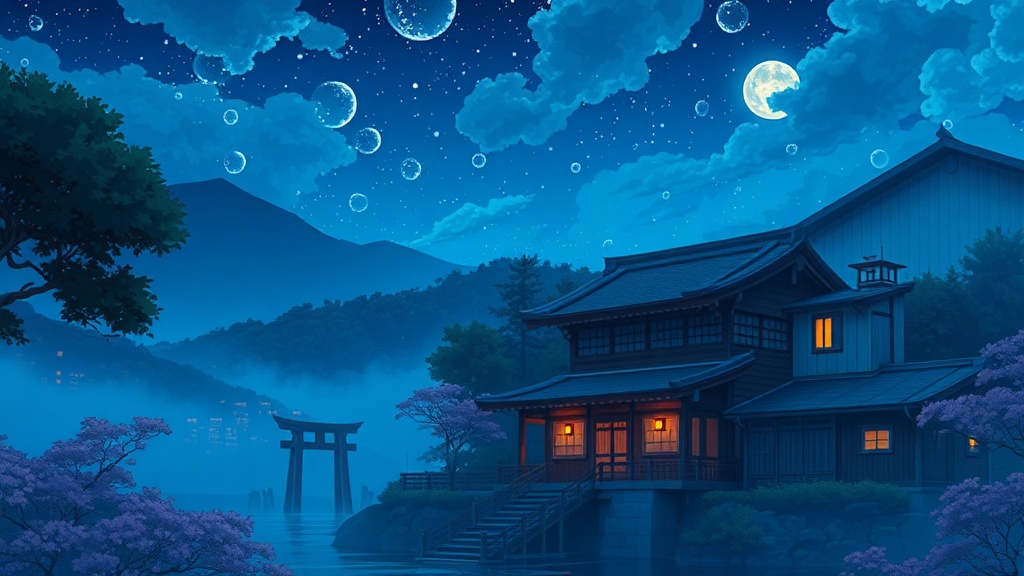
Hidden Details in Studio Ghibli Landscapes

The Living Forest of Totoro
Culinary Realism in Spirited Away
The Floating Islands of Castle in the Sky
Imagine sitting in a darkened room, watching the wind ripple through a field of tall, silver grass in Princess Mononoke. You aren't just looking at a drawing; you're watching a living, breathing ecosystem. Studio Ghibli films are famous for their hand-drawn aesthetic, but the real magic lies in the tiny, often overlooked details hidden within their environments. This post breaks down how Hayao Miyazaki and his team use environmental storytelling to build depth, from the specific flora of a Japanese forest to the way light hits a kitchen table.
Most viewers focus on the characters or the main plot points. They miss the way a single falling leaf or the specific texture of a weathered wooden porch tells a story about a character's state of mind. It’s that level of intentionality that separates a standard animation from a masterpiece.
Why is Studio Ghibli's Background Art So Detailed?
Studio Ghibli's background art is so detailed because the studio prioritizes hand-painted gouache paintings to create a sense of "lived-in" reality. Unlike many modern studios that rely heavily on digital 3D modeling, Ghibli maintains a commitment to hand-drawn textures. This creates a tactile sensation—you can almost smell the rain on the pavement or the scent of baking bread in Kiki's Delivery Service.
The artists don't just paint a generic forest. They research specific types of moss, bark, and foliage to ensure the setting feels authentic to its supposed location. When you see a forest in My Neighbor Totoro, you aren't just seeing "greenery." You're seeing a specific depiction of the Japanese countryside, complete with the damp, heavy atmosphere of a rainy season. This level of detail anchors the fantasy elements in a world that feels physically real.
It’s a technique called environmental storytelling. The world tells you who a character is before they even speak. A cluttered, messy room in Howl's Moving Castle tells you more about the chaos of the household than a line of dialogue ever could.
The Subtle Language of Food and Domesticity
One of the most famous Ghibli tropes is the "food scene." We've all seen it—the steaming ramen, the thick slices of bread, or the perfectly fried eggs. But there's a reason these scenes feel so heavy and satisfying. The artists pay obsessive attention to how light reflects off a liquid or how steam rises from a bowl.
This isn't just about making you hungry. It's about grounding the characters in their humanity. Eating is a universal, biological experience. By rendering food with such precision, the animators bridge the gap between the magical worlds and our own reality. It makes the fantastical elements—like flying broomsticks or soot sprites—feel much more believable because the "human" parts of the world are so grounded.
If you're interested in how different eras of animation handled these textures, you might enjoy reading about the lost echoes of the golden age of cinema, where many of these hand-painted traditions were born.
How Does Light Change the Mood in Ghibli Films?
Light functions as a character in Ghibli films, shifting the emotional temperature of a scene through subtle changes in color temperature and shadow density. A bright, high-contrast sunlight might signal a moment of childhood wonder, while a soft, blue-tinted twilight can signal melancholy or the approach of something supernatural.
Consider the way light interacts with water. In Ponyo, the ocean isn't just a blue mass; it's a shifting, translucent entity that reacts to the light of the sun and moon. The way the light refracts through the waves adds a layer of kinetic energy that makes the ocean feel alive. This isn't just a background—it's an active participant in the narrative.
Here is a breakdown of how light and texture are used to signal different narrative tones:
| Element | Visual Technique | Emotional Impact |
|---|---|---|
| Golden Hour | Warm, amber light and long shadows | Nostalgia, peace, or the end of an era |
| Overcast Sky | Low contrast, desaturated colors | Melancholy, tension, or stillness |
| Forest Canopy | Dappled sunlight (Komorebi) | Magic, mystery, and natural vitality |
| Night Scenes | Deep blues and sharp, localized light sources | Isolation, solitude, or the supernatural |
The term komorebi—the way sunlight filters through the leaves of trees—is a perfect example of this. Ghibli films use this effect to create a sense of awe. It’s a tiny detail, but it’s what makes the world feel deep. You aren't just looking at a flat surface; you're looking into a space with volume and history.
The Importance of "Ma" (The Space Between)
Miyazaki often speaks about the concept of ma. It’s the "emptiness" or the "gap" in a story. In many Western animations, every second is packed with action or dialogue. Ghibli does the opposite. It allows for "quiet" moments—a shot of a cloud moving, a character waiting for a bus, or just the sound of wind in the grass.
These aren't "filler" scenes. They are vital for building the atmosphere. They give the audience space to breathe and process the world. Without these moments, the high-stakes magic would feel hollow. The quietness is what makes the loud moments actually matter.
What Makes Ghibli's Nature Depictions So Realistic?
Ghibli's nature depictions feel real because they are based on rigorous observation of the natural world and specific botanical accuracy. The artists don't just draw "a tree"; they draw a tree that looks like it has weathered decades of storms, with specific textures of bark and moss growth.
This realism extends to the weather. In many films, the weather isn't just a backdrop—it's a structural element. The rain in Spirited Away feels heavy and intrusive, heightening the sense of displacement the characters feel. The wind isn't just a movement of lines; it has a direction and a weight. You can see it in the way the clothing of the characters reacts to the gusts.
For those interested in the technical side of how these environments are constructed, the official Wikipedia page for Studio Ghibli provides extensive documentation on their production methods and history. The transition from traditional cel animation to digital workflows is a fascinating study in how a studio maintains its soul while adopting new tools.
One of the most striking things is the use of color palettes. The colors are rarely "neon" or "artificial." Even in fantasy settings, the colors feel organic—earth tones, deep greens, and weathered ochres. This keeps the fantastical elements from feeling jarring. Even when a dragon appears, it feels like it belongs to the same biological world as the grass and the dirt.
The Architecture of the Mundane
The buildings in Ghibli films are just as important as the forests. Whether it's a cluttered bakery or a sprawling, decaying mansion, the architecture tells a story of time. You can see the layers of paint peeling, the way wood darkens with age, and how objects have been moved over years of use. This creates a sense of "lived-in" history. It implies that the world existed long before the camera started rolling and will continue to exist after the characters leave.
This attention to the "mundane" is what builds the emotional connection. We recognize these spaces. We recognize the way a kitchen looks in the morning light or how a hallway feels when it's quiet. By mastering the ordinary, Ghibli makes the extraordinary feel possible.
It’s a masterclass in detail. Next time you watch one of these films, don't just look at the characters. Look at the corner of the room. Look at the way the light hits the water. That's where the real story is hiding.