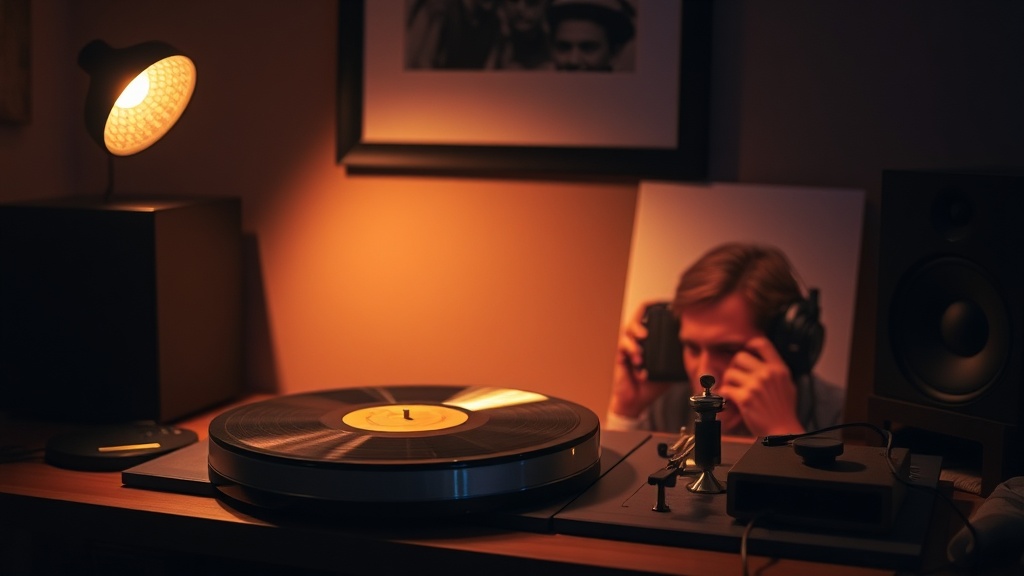
Creating a Personal Vinyl Listening Station

Have you ever wondered why a physical record sounds different from a digital stream, or why people are spending hundreds of dollars on plastic discs in a digital age? This guide breaks down the technical and aesthetic requirements for building a dedicated vinyl listening station. We'll look at the hardware, the space, and the specific components you need to turn a corner of your room into a high-fidelity sanctuary.
What Components Do I Need to Start Listening to Vinyl?
To start listening to vinyl, you need a turntable, a phono preamplifier, a power amplifier, and a set of speakers. This is the basic signal path that takes the tiny, physical vibrations from a record groove and turns them into audible sound waves in your room.
The turntable is the heart of the operation. You might be tempted to grab the cheapest model at a big-box store, but be careful—those often use heavy plastic components that can actually damage your records. Look for something with a stable platter and a decent counterweight. The Technics SL-1200 series is a classic-for-a-reason, though there are plenty of entry-level options from brands like Audio-Technica that won't break the bank.
Next, you have to deal with the signal. A turntable's output is incredibly quiet—so quiet you can barely hear it through standard speakers. This is where the phono preamp comes in. It boosts that tiny signal so it's actually usable. You can buy a standalone preamp, or look for a "phono stage" built directly into your amplifier or receiver.
The signal path looks like this:
- Turntable: Picks up the grooves.
- Phono Preamp: Boosts the signal.
- Amplifier: Provides the power.
- Speakers: Converts electrical signals into sound.
Don't forget the cables. You'll need RCA cables to connect your components. If you're using a modern setup, you might also need a USB interface if you plan on digitizing your collection later. It's a small detail, but cheap cables can introduce unwanted hum or buzz (and nobody wants that static during a quiet jazz track).
How Much Does a Beginner Vinyl Setup Cost?
A beginner vinyl setup typically costs between $300 and $800, depending on whether you choose entry-level-integrated components or standalone pieces. You can certainly find cheaper, but you'll likely sacrifice sound quality and long-term durability.
I've broken down the typical price tiers below to help you visualize where your money goes. It's better to spend a bit more now than to buy a cheap setup that ruins your favorite albums.
| Tier | Estimated Cost | What You Get |
|---|---|---|
| Budget | $200 - $400 | All-in-one players (like Crosley or Victrola) and basic bookshelf speakers. |
| Mid-Range | $500 - $1,200 | Dedicated turntable, external phono preamp, and high-quality powered speakers. |
| Audiophile | $2,000+ | High-end components, heavy-duty plinths, and professional-grade amplification. |
The "all-in-one" players you see in many department stores are fine for a casual listener, but they are often "suitcase" style players. These are notorious for having heavy tracking force, which can wear down the grooves of your records over time. If you actually care about your collection, avoid them. Invest in a real turntable. It's a one-time cost that pays off in the longevity of your music.
If you're interested in how audio engineering works on a deeper level, the history of the phonograph is a fascinating rabbit hole. It shows just how far we've come from wax cylinders to the precision of modern vinyl.
How Do I Choose the Right Speakers for My Space?
You should choose speakers based on the size of your room and whether you want an active (powered) or passive setup. Active speakers have their own built-in amplifiers, while passive speakers require a separate receiver or amplifier to function.
Active speakers are a great choice for a small listening station. They are "plug and play"—you connect your turntable (through a preamp) and you're done. Brands like Klipsch or KEF make excellent powered monitors that don't require a massive rack of equipment. This keeps your station looking clean and intentional rather than cluttered.
On the other hand, a passive setup offers more flexibility. If you decide you want better sound later, you can just upgrade your speakers or your amp separately. It's a modular way to build. If you've ever spent time building a retro synthesizer setup, you'll appreciate the modularity of a traditional hi-fi system. It allows for constant experimentation.
Placement is everything. Don't shove your speakers right into a corner. They need space to "breathe" so the sound waves can develop. If your speakers are too close to a wall, the bass might become muddy and overwhelming. Give them a few inches of clearance—at least—to ensure a balanced soundstage.
The Importance of the Surface
Your listening station isn't just about the electronics; it's about the environment. A turntable is a delicate instrument that responds to vibrations. If you place your turntable on the same surface as your speakers, the vibrations from the music will travel through the furniture and cause a "feedback loop." This results in a literal physical shaking of the needle in the groove.
To prevent this, use a heavy, stable surface. A solid wood desk or a dedicated record cabinet works best. You might also consider an isolation platform or a heavy-duty turntable mat. These small additions can significantly reduce unwanted noise and keep your playback smooth.
Also, keep your station away from direct sunlight or heat sources. Heat can warp the vinyl, and UV rays can fade those beautiful cover art designs we all love. Your record collection is an investment in both sound and art—treat it that way.
Lastly, keep a cleaning kit nearby. A carbon fiber brush is a must-have. A quick sweep before every play removes the dust and static that can ruin a listening session. It's a small ritual, but it makes a massive difference in the clarity of the audio.
Steps
- 1
Choose Your Turntable
- 2
Select Compatible Speakers
- 3
Optimize Surface Stability
- 4
Curate Your Record Display